OK, so my whole plan to write that long piece on left-wing morosity has come to a shuddering halt. Never make promises you can't keep. But, in order to partly fulfil it, here's what I got down, which is what I wrote the five minutes after I had the idea...
The most remarkable thing about Chris Petit's Content (still available on 4oD for a couple of days. NB: Not anymore) was how easily it fell into the familiar pattern of morose decrying of contemporary society. It seems, nowadays, that to criticise the neoliberal, globalising mission of Western (and increasingly Eastern) governments, is to affect the pose of a sleep-walker at a funeral, leaden-footed and mono-toned.
It is to buy - without reflection - into a narrative already set in motion, a narrative which passively lists what is wrong without appearing to actually have any belief in its power as critique, without having any of the required positivity involved in actively positing something different and laying out how it can work.
The important thing - for the weavers of this narrative - is not to question the narrative itself, but to critique simply the society that sets itself up to be critiqued. Whatever you do, don't question the narrative itself, the increasingly repetitious narrative of the disjointed, morose left. The key thing is not to question this, but to posit your originality within it, to find your niche so that your voice can be heard, and hopefully heralded as "long overdue" and "important".
This pose also is increasingly technophobic. It both amazes and frustrates me that we (both as a society and more specfically as left-wingers) allow generalised, lazy thinking about the internet and technology when we decry precisely that in politics, culture, urban planning, and pretty much everything else. As the monotone voice-over of the film intones, "for all the excitement of the internet, for which read: online gambling, conspiracy theories, and internet porn, most of it remains as flat as the plains of the American west, blighted by tumble-weed and inhabited by the redundant, the forlorn, and the unvisited in search of belonging." No mention of the use of the internet by dispersed resistance groups, by local communities, by freedom-of-information advocates, by Obama; or by small presses to distribute avant-garde and experimental literature around the world, or musicians and film-makers to find audiences for their work, or by artists to share work, or simply by people from different backgrounds to come into contact with each other. Clearly there is a lot of utopianism about the internet, but the way to correct that is not by lazy, uninformed diatribes against the sorts of things one finds in the "real" world beyond the internet as much as on it: physical casinos appearing in city centres, BNP and EDL marches in English cities, the sex-shops of Soho.
I find myself frustrated with a left that refuses to feel confident and positive about itself. It's a left that has no chance of appealing to those beyong the converted if it carries on like it.
Showing posts with label internet. Show all posts
Showing posts with label internet. Show all posts
27.4.10

21.3.10
Time for a Manifesto?
I've noticed of late a little spike in things - books, ideas - being described as manifestos. This observation is entirely non-scientific, and I don't have any figures to back it up, but it seems as if the manifesto is having something of a mini-renaissance.
Firstly, there's David Shield's Reality Hunger, which seems to be causing quite the controversy a manifesto is supposed to, although it does appear to be a rather subdued controversy, mainly concerning the viewpoint that it's not-really-very-radical and thus not-really-a-manifesto. I am yet to read it, though rather itching to, as it will no doubt form quite a large part of my future studies, and more pressingly I gather there's a mention of cellphone novels in there somewhere that I have to dig out.
Secondly, there's this - You are Not a Gadget (: A Manifesto) in which the inventor of Virtual Reality Jaron Lanier decides the internet's rubbish now. I think Michael Agger may have it right in his review: "The Web hasn't lost flavor; you've lost flavor."
Thirdly - and this is what made me think there was something worth noting here - is Tony Judt's piece in the Guardian on Saturday, which in the paper version was called A Manifesto for a Brighter Future but on the net is called A Manifesto for a New Politics, which is strange, given that it's a manifesto for a traditional social democracy that realises that "radicalism has always been about conserving valuable pasts". Which may or may not be true - the piece is generally good, I think, even if it places a little too much faith in the idea of social democracy - but what is interesting is how it's called a "manifesto". Why? It isn't really, or if it is then a whole host of opinion pieces in newspapers around the world can be called manifestos. And the two books above seem to have added their colonic subtitles for reasons of provocation rather than a genuinely held belief that they are putting across something new. David Shields, perhaps, thinks he's doing that, but if some reviews are to go by, his something new is to say that non-fiction or the tinkering between it and fiction is the way forward, which isn't particularly new. And Lanier's book appears to be a collection of column articles. Which isn't new or even a coherent single piece!
And of course there's the altermodern, which had a manifesto, even if it did seem to be going through the motions somewhat.
So why manifestos? Times are rough/tough/uncertain etc, and in these sorts of times people are supposedly open to big ideas (although none so big as to actually make a difference: hence the use of the word "recovery" so often in relation to the economy), and big ideas need big statements to get them across and that means a manifesto. But it's a particularly postmodern idea of a manifesto that seems to be doing the rounds - call it a manifesto but actually aim to change very little.
Having said that, it would be exciting if we had a new age of manifestos by radical artists being published on the front page of the Daily Telegraph.
Firstly, there's David Shield's Reality Hunger, which seems to be causing quite the controversy a manifesto is supposed to, although it does appear to be a rather subdued controversy, mainly concerning the viewpoint that it's not-really-very-radical and thus not-really-a-manifesto. I am yet to read it, though rather itching to, as it will no doubt form quite a large part of my future studies, and more pressingly I gather there's a mention of cellphone novels in there somewhere that I have to dig out.
Secondly, there's this - You are Not a Gadget (: A Manifesto) in which the inventor of Virtual Reality Jaron Lanier decides the internet's rubbish now. I think Michael Agger may have it right in his review: "The Web hasn't lost flavor; you've lost flavor."
Thirdly - and this is what made me think there was something worth noting here - is Tony Judt's piece in the Guardian on Saturday, which in the paper version was called A Manifesto for a Brighter Future but on the net is called A Manifesto for a New Politics, which is strange, given that it's a manifesto for a traditional social democracy that realises that "radicalism has always been about conserving valuable pasts". Which may or may not be true - the piece is generally good, I think, even if it places a little too much faith in the idea of social democracy - but what is interesting is how it's called a "manifesto". Why? It isn't really, or if it is then a whole host of opinion pieces in newspapers around the world can be called manifestos. And the two books above seem to have added their colonic subtitles for reasons of provocation rather than a genuinely held belief that they are putting across something new. David Shields, perhaps, thinks he's doing that, but if some reviews are to go by, his something new is to say that non-fiction or the tinkering between it and fiction is the way forward, which isn't particularly new. And Lanier's book appears to be a collection of column articles. Which isn't new or even a coherent single piece!
And of course there's the altermodern, which had a manifesto, even if it did seem to be going through the motions somewhat.
So why manifestos? Times are rough/tough/uncertain etc, and in these sorts of times people are supposedly open to big ideas (although none so big as to actually make a difference: hence the use of the word "recovery" so often in relation to the economy), and big ideas need big statements to get them across and that means a manifesto. But it's a particularly postmodern idea of a manifesto that seems to be doing the rounds - call it a manifesto but actually aim to change very little.
Having said that, it would be exciting if we had a new age of manifestos by radical artists being published on the front page of the Daily Telegraph.

20.10.09
BookServer Wow!
I don't really know much about eBooks, and Amazon's Kindle and other things seemed ridiculously specific to me. But this post on the Institute for the Future of the Book's blog, is as mindblowing as the poster says.
"* He then choreographed a series of demonstrations. Raj Kumar from Internet Archive demonstrated how the BookServer technology can deliver books to the OLPC (One Laptop per Child) XO laptop, wirelessly. There are 1 million of these machines in the hands of underprivileged children around the world, and today they just got access to 1.6 million new books."
And as a commenter posts:
"Bookserver is definitely NOT limited to public domain books — the intent is to make it possible for anyone to download ANY book (PD, out-of-print, in-print) to ANY device."
That's pretty wow!
"* He then choreographed a series of demonstrations. Raj Kumar from Internet Archive demonstrated how the BookServer technology can deliver books to the OLPC (One Laptop per Child) XO laptop, wirelessly. There are 1 million of these machines in the hands of underprivileged children around the world, and today they just got access to 1.6 million new books."
And as a commenter posts:
"Bookserver is definitely NOT limited to public domain books — the intent is to make it possible for anyone to download ANY book (PD, out-of-print, in-print) to ANY device."
That's pretty wow!
10.10.09
OK, this is basically it...
...it being my dissertation, PhD, and desired workplace!
Looking for the altermodern in literature, Mark? Why, yes, I am actually! Well, try this for size:
"One major consequence of the shift to digital is the addition of graphical, audio, and video elements to the written word. More profound, however, is the book's reinvention in a networked environment. Unlike the printed book, the networked book is not bound by time or space. It is an evolving entity within an ecology of readers, authors and texts. Unlike the printed book, the networked book is never finished: it is always a work in progress."
Oh yes, that would seem to be it, then, wouldn't it?
Looking for the altermodern in literature, Mark? Why, yes, I am actually! Well, try this for size:
"One major consequence of the shift to digital is the addition of graphical, audio, and video elements to the written word. More profound, however, is the book's reinvention in a networked environment. Unlike the printed book, the networked book is not bound by time or space. It is an evolving entity within an ecology of readers, authors and texts. Unlike the printed book, the networked book is never finished: it is always a work in progress."
Oh yes, that would seem to be it, then, wouldn't it?
21.4.09
Le Corbusier, Iannis Xenakis, Edgard Varèse - Poème électronique
Browsing Rhizome today, I found this.
It appears to be an attempt at creating an audio-visual environment that accompanies the Philips Pavilion. Rhizome linked to Media Art Net who described it as "the first, electronic-spatial environment to combine architecture, film, light and music to a total experience made to functions in time and space."

Dated 1958 - before the similar audio-visual-environmental light-shows of late 60s Gustav Metzger and Cream - it's an interesting embrace of new technologies and collaboration between different art forms; a spirit we can perhaps see in the new media art that Rhizome produces, initiates and exhibits. It's possible that the early, faltering steps of electronic visual manipulation seen in the Poème électronique are replicated in the collaborations between web designers, artists, musicians and architects seen on Rhizome's website, Turbulence, BLDGBLOG and others.
A study could be done of the "childhood" periods of art movements and techniques, charting the early, more carefree stages. I've often thought - most likely others have too - that the best time to be a rock music fan would've been between, say, 1958 and 1968. Likewise hip-hop, which I still think is sufficiently teenage to be interesting, was probably most exciting in the 80s. I find it difficult to make a comparison for the 2000s.
It appears to be an attempt at creating an audio-visual environment that accompanies the Philips Pavilion. Rhizome linked to Media Art Net who described it as "the first, electronic-spatial environment to combine architecture, film, light and music to a total experience made to functions in time and space."

Dated 1958 - before the similar audio-visual-environmental light-shows of late 60s Gustav Metzger and Cream - it's an interesting embrace of new technologies and collaboration between different art forms; a spirit we can perhaps see in the new media art that Rhizome produces, initiates and exhibits. It's possible that the early, faltering steps of electronic visual manipulation seen in the Poème électronique are replicated in the collaborations between web designers, artists, musicians and architects seen on Rhizome's website, Turbulence, BLDGBLOG and others.
A study could be done of the "childhood" periods of art movements and techniques, charting the early, more carefree stages. I've often thought - most likely others have too - that the best time to be a rock music fan would've been between, say, 1958 and 1968. Likewise hip-hop, which I still think is sufficiently teenage to be interesting, was probably most exciting in the 80s. I find it difficult to make a comparison for the 2000s.
12.4.09
Benjamin H Brattan @ Postopolis
Dan Hill has posted the whole of Benjamin H Brattan's talk at the end of Postopolis on City of Sound.
It's a fascinating collection of musings on the economic crisis, the internet, design, space, politics; essentially a collation of thoughts on 'the now' from an avowed "out of the closet theorist".
Reading it, I found myself linking it to the things I've been reading recently about the altermodern, and low and behold!, Brattan mentions Bourriaud about half-way through the talk. Lucky then, as I was busy connecting thoughts and intuitions between them and creating new thesis ideas along the way.
There appears to be a considerable dialogue emerging - probably accelerated by the "credit crunch" - looking at the ways we live in the twenty-first century, about the possibilities and opportunities for change but also worries about not taking those opportunities. Do we have the right people in charge to take those opportunities? Does the concept of people in charge inherently damage a possibility for change?
All are in agreement about the growing out-dated-ness of postmodernism. It has reached saturation point, a moment in which postmodernism is becoming passé, washed up; irrelevant! Of course that doesn't mean we are in a post-postmodernism. It just means we are in a gap between post- and pre-. That is what Brattan's talk focussed on.
The main idea I've taken away from it, from a literature/art point of view, is an idea of the "afterimage". The designation "post" is used, Brattan notes, "to name a particular state of things that is somehow eclipsed but not entirely done with." We are in that moment now, a society creating afterimages. Afterimages of what, though? After postmodernism, after politics, after economics? No-one knows. Because we haven't entered a stage that can easily be called "an ism", we are left flailing in a limbo, using up yesterday's leftovers but not cooking a new dinner. Unsettling as this all may be, these sorts of conditions tend to be fertile ground for exciting art and ideas. This is emerging as the topic of my dissertation...
It's a fascinating collection of musings on the economic crisis, the internet, design, space, politics; essentially a collation of thoughts on 'the now' from an avowed "out of the closet theorist".
Reading it, I found myself linking it to the things I've been reading recently about the altermodern, and low and behold!, Brattan mentions Bourriaud about half-way through the talk. Lucky then, as I was busy connecting thoughts and intuitions between them and creating new thesis ideas along the way.
There appears to be a considerable dialogue emerging - probably accelerated by the "credit crunch" - looking at the ways we live in the twenty-first century, about the possibilities and opportunities for change but also worries about not taking those opportunities. Do we have the right people in charge to take those opportunities? Does the concept of people in charge inherently damage a possibility for change?
All are in agreement about the growing out-dated-ness of postmodernism. It has reached saturation point, a moment in which postmodernism is becoming passé, washed up; irrelevant! Of course that doesn't mean we are in a post-postmodernism. It just means we are in a gap between post- and pre-. That is what Brattan's talk focussed on.
The main idea I've taken away from it, from a literature/art point of view, is an idea of the "afterimage". The designation "post" is used, Brattan notes, "to name a particular state of things that is somehow eclipsed but not entirely done with." We are in that moment now, a society creating afterimages. Afterimages of what, though? After postmodernism, after politics, after economics? No-one knows. Because we haven't entered a stage that can easily be called "an ism", we are left flailing in a limbo, using up yesterday's leftovers but not cooking a new dinner. Unsettling as this all may be, these sorts of conditions tend to be fertile ground for exciting art and ideas. This is emerging as the topic of my dissertation...
Subscribe to:
Posts (Atom)
Me
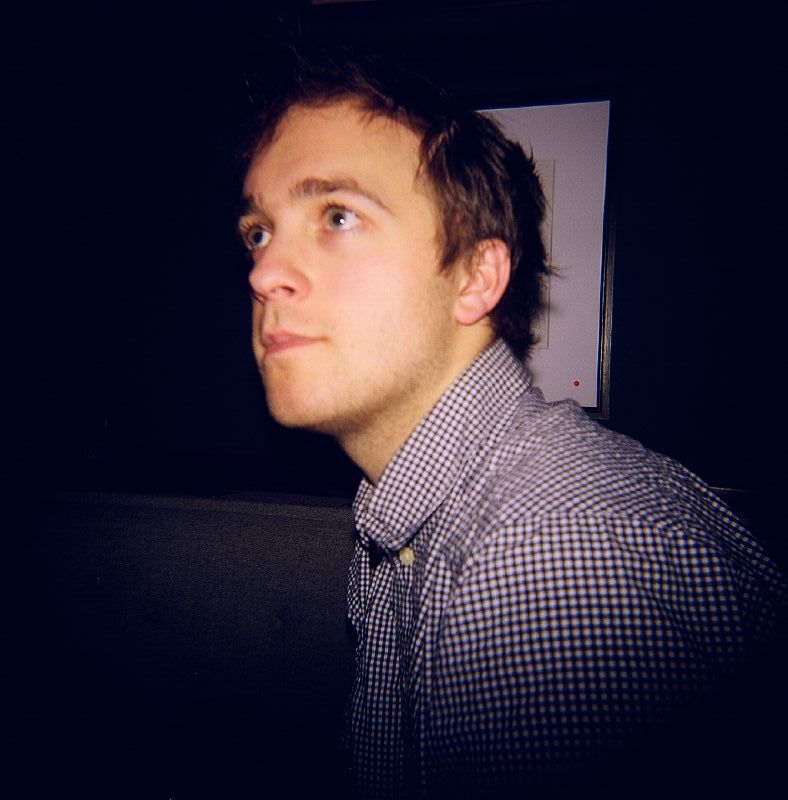
- Mark
- I am writing a PhD at the University of Glasgow entitled "The Poetics of Time in Contemporary Literature". My writing has been published in Type Review, Dancehall, Puffin Review and TheState. I review books for Gutter and The List. I am also an editor and reviewer at the Glasgow Review of Books.